
Earthwatch - JCU
Yunbenun (Magnetic Island), Australia
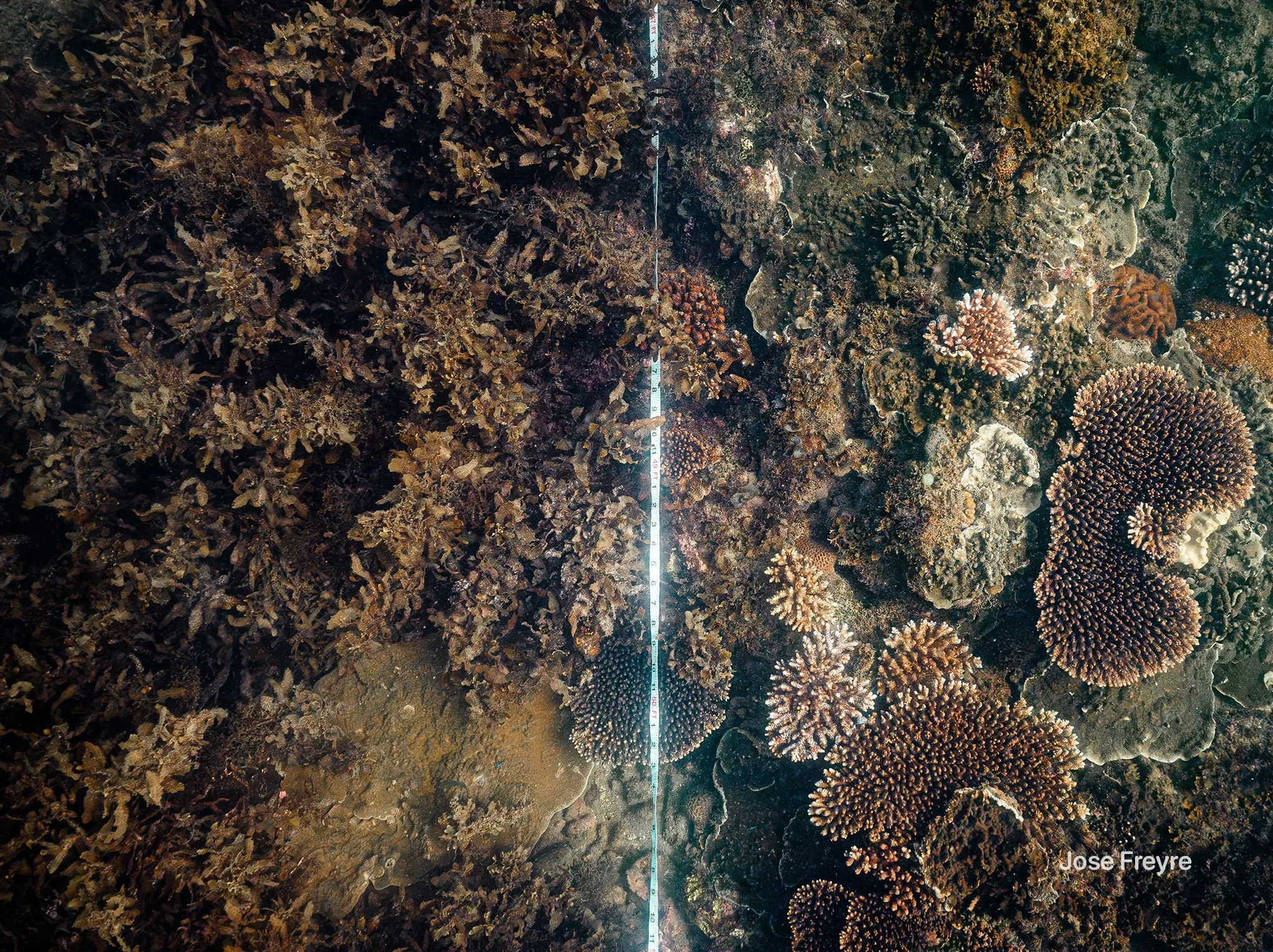
At Yunbenun, scientific research on sea-weeding has been ongoing since 2018. The site is a collaboration between James Cook University scientists and Earthwatch Australia.
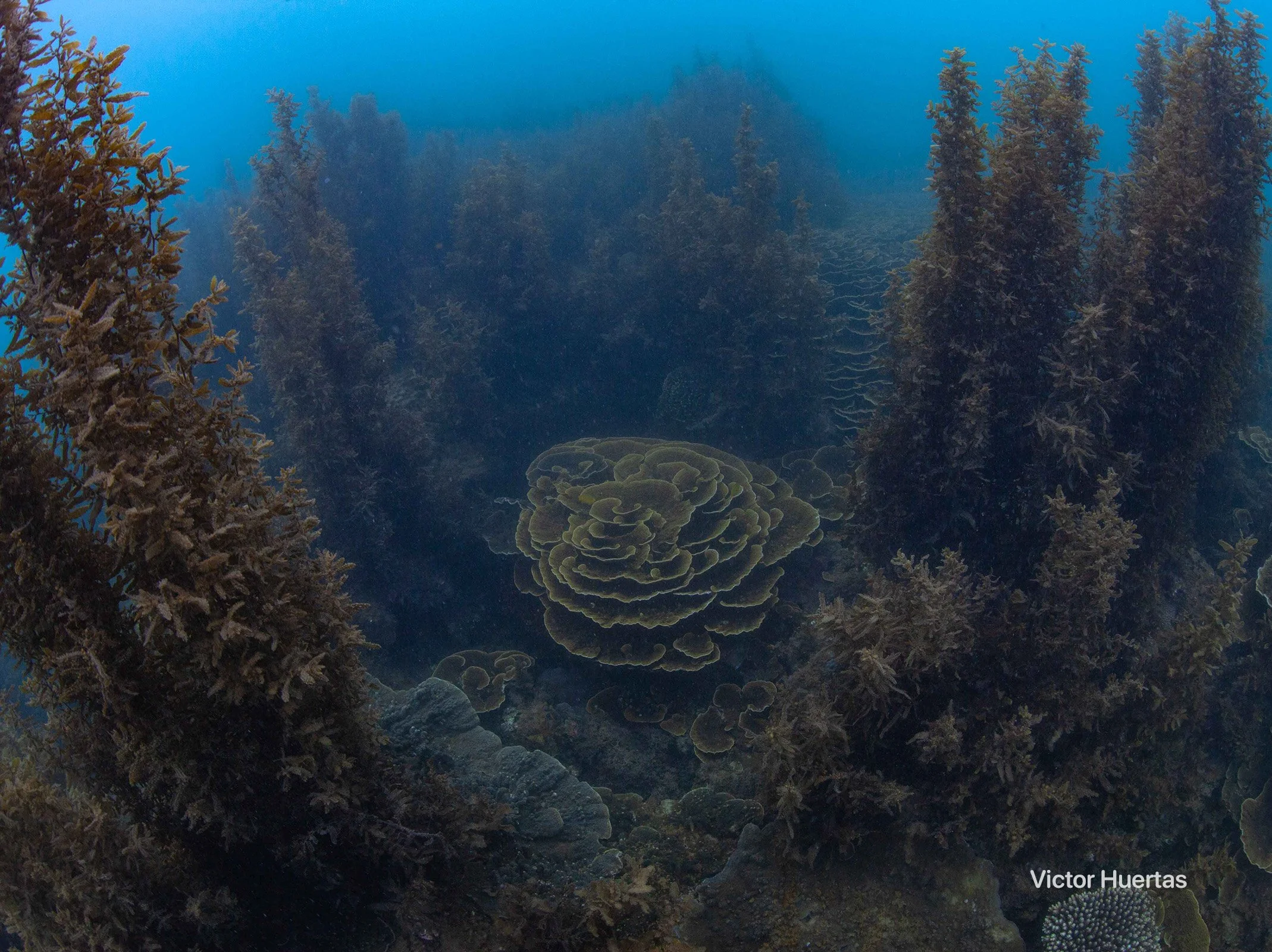
Our StoryYunbenun reefs are dominated by benthic Sargassum spp.
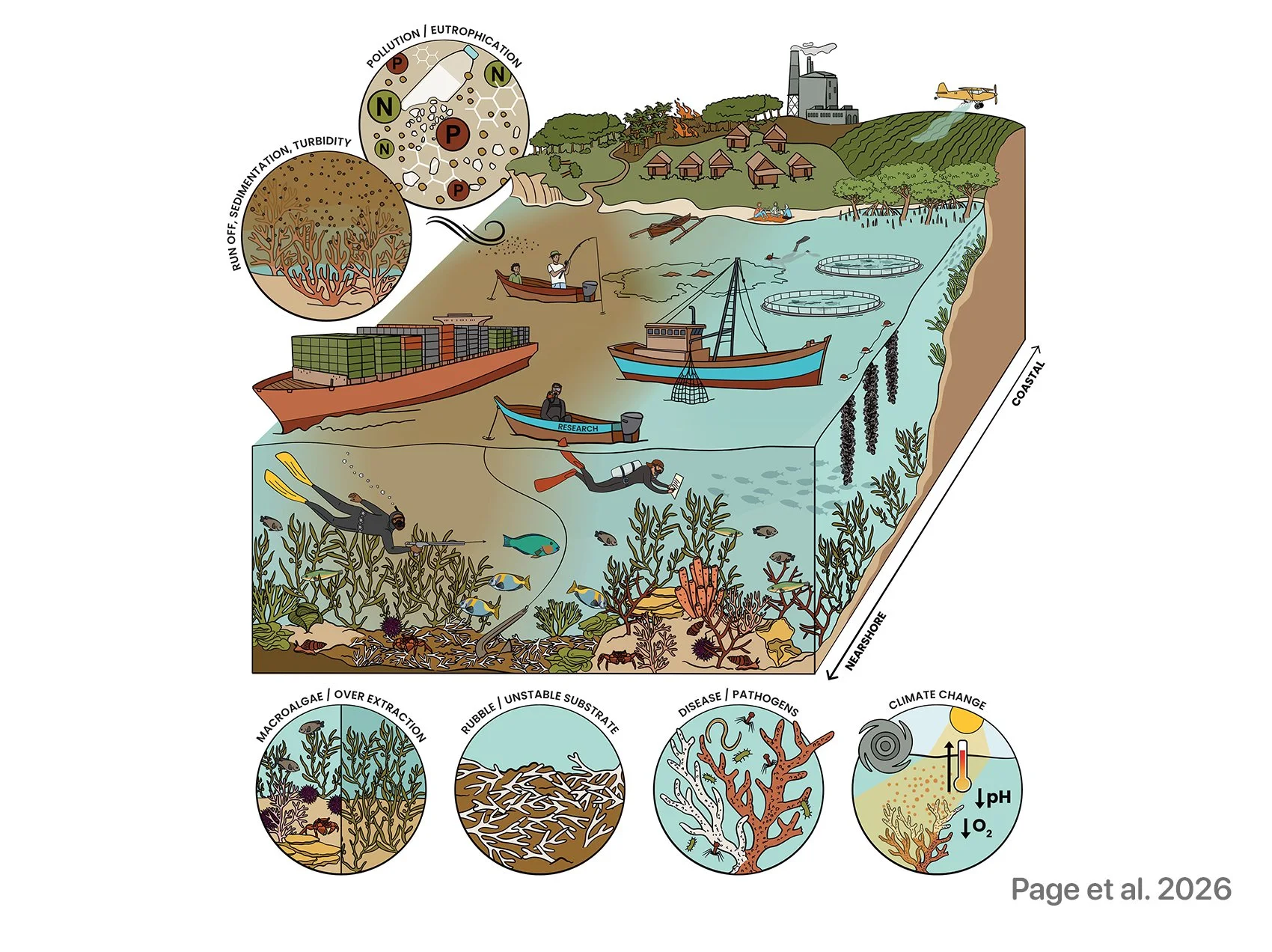
Yunbenun (Magnetic Island) is located in the central inshore region of Australia’s Great Barrier Reef. Approximately 10km from the city of Townsville, it is home to diverse fringing coral reefs, mangroves, and seagrass beds. Townsville hosts a major shipping port which was established in the 1880s, and dredging since its establishment has led to increased sedimentation of the reefs surrounding Yunbenun. Combined with cyclones, flooding, and mass bleaching, the reefs of Yunbenun have showed a long-term shift toward macroalgae dominance, primarily Sargassum spp. Multiple lines of evidence support this shift, including historic archives, eDNA derived from sediment cores, repeat benthic monitoring, and oral histories.
This sea-weeding site was established in 2018 as a collaboration between James Cook University (led by Professor David Bourne and Hillary Smith) and Earthwatch Australia.
What we're doingUnderstanding the pros and cons of weeding
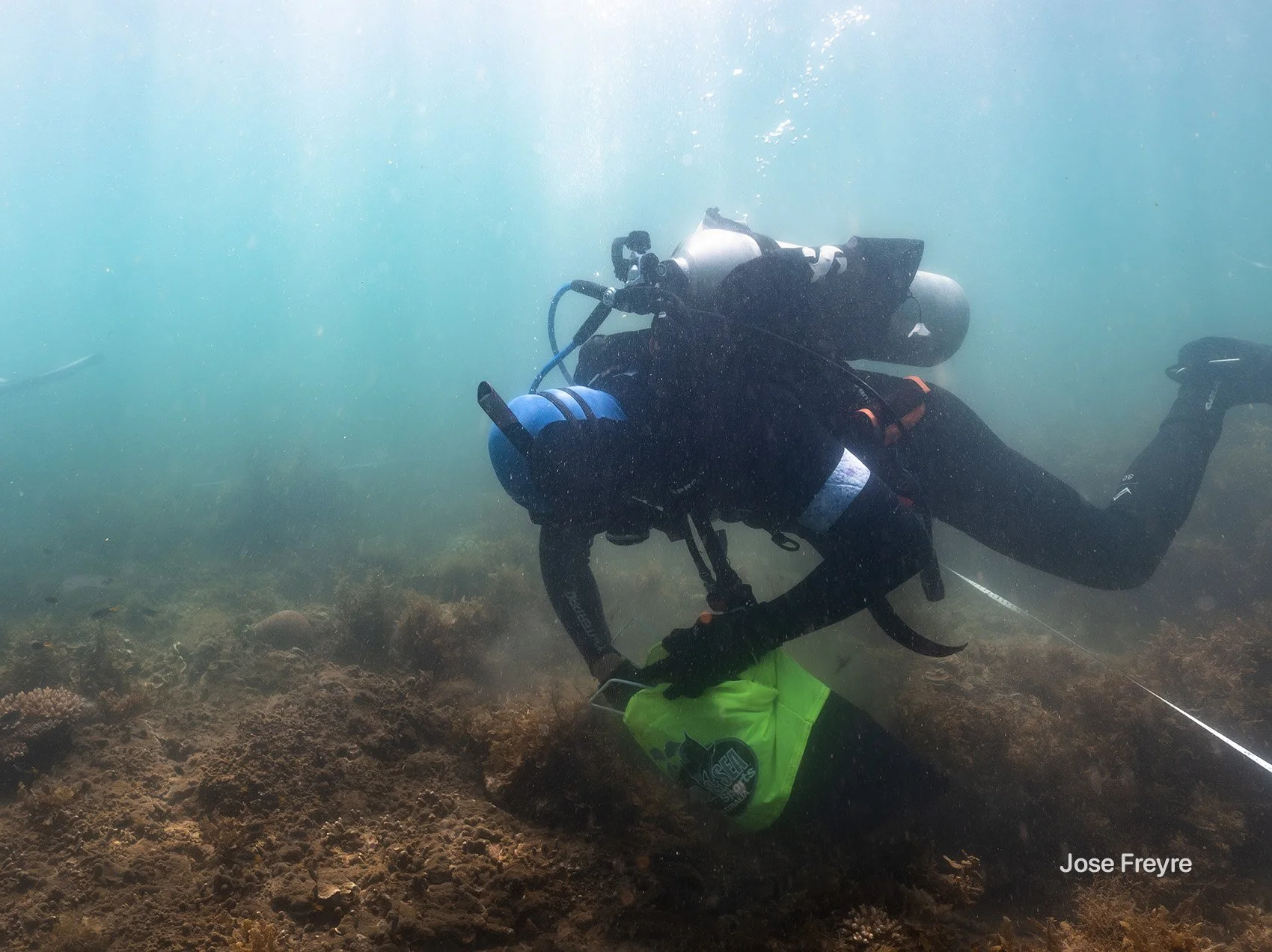
The research at Yunbenun has examined the long-term ecological impacts of weeding, along with trying to determine the best timing and frequency of intervention. The site has twelve 5m x 5m plots established in each of two bays, with six plots in each bay being controls (left untouched) and six plots as intervention (weeded). Weeding is done manually alongside citizen scientists from Earthwatch twice per year - once right before coral spawning, and once around when the macroalgae reproduce and senesce. The team has monitored a long list of metrics, aiming to understand not only if weeding works for restoration of corals, but how it affects other elements of the ecosystem to ensure there are no unintended consequences. The metrics monitored include: benthic cover, coral recruitment, coral juvenile density, algal density and canopy height, coral bleaching risk and recovery, fish communities (visual surveys and eDNA), rubble-associated invertebrate communities (using RUBS and eDNA), micro-benthic community succession, sediment deposition, turf algae growth, hydrodynamics, and the impact of disturbances (heatwaves, floods, and cyclones) on restoration success. The site has also hosted research investigating synergies between sea-weeding and other restoration methods (e.g., coral seeding).
What we've foundSea-weeding restores coral cover and diversity
Since 2018, the team has removed over 3000 kg of seaweed from the experimental plots at Yunbenun. And in response, the reef has thrived. While it took a few years of effort, coral cover skyrocketed from a starting point of 5-8% cover to over 60% cover. Excitingly, coral diversity also increased. While most restoration methods focus on one or a few species, sea-weeding seems to benefit a wide range of corals, restoring diverse functions and habitats to the reef. Many of the research findings have already been published (see below), but please reach out if you’d like to hear how other elements are progressing.
Stay tuned for more updates from our project!
Research outputs
-
![Underwater scene featuring a cluster of coral, encrusted with algae and small marine organisms.]()
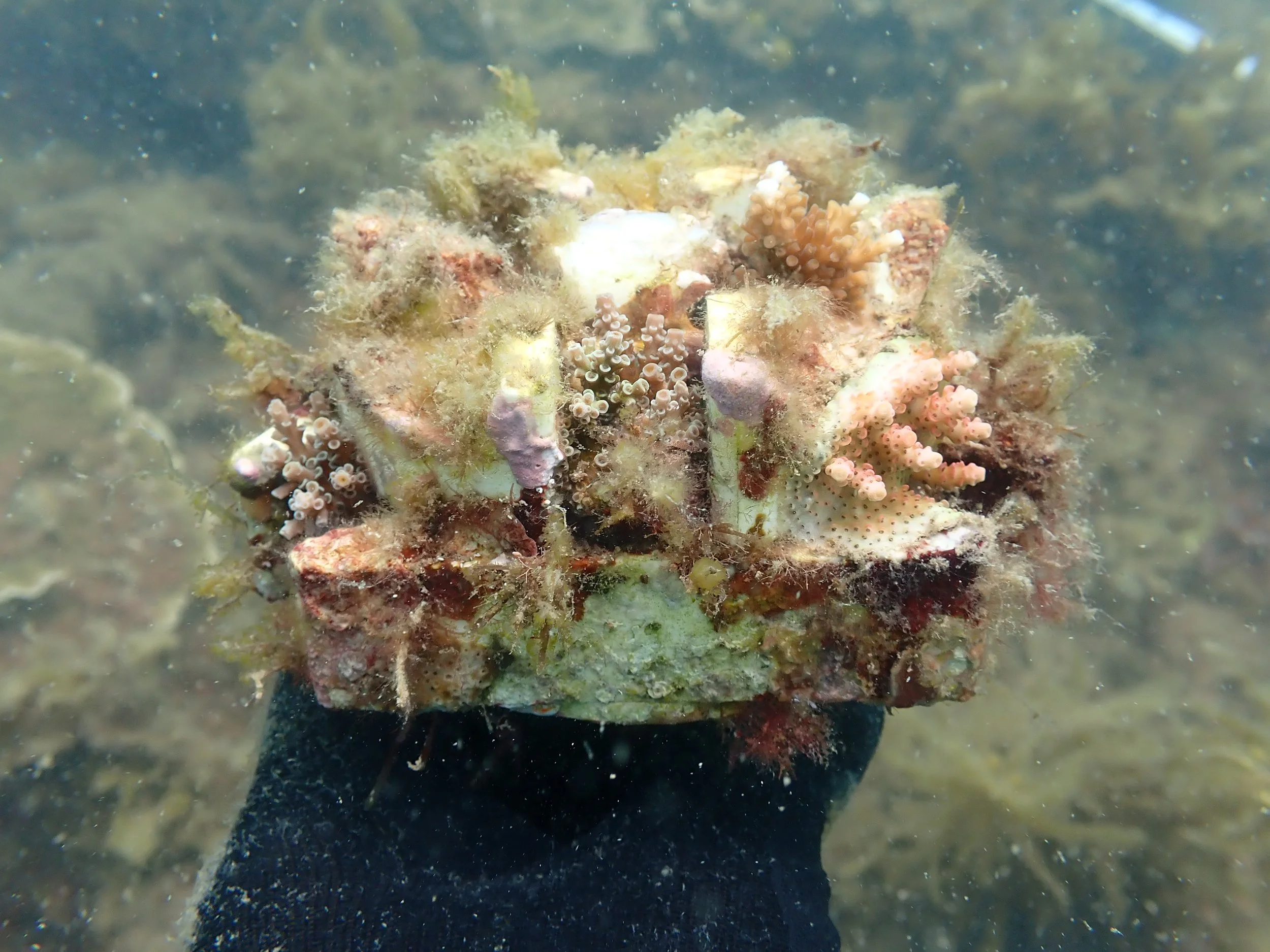
Sea-weeding enhances early coral survival on seeding devices, but benefits of seeding diminish after one year
2026
-
![Underwater scene of a coral reef with various types of corals and marine plants.]()
Macroalgal removal increases calcifier abundance and promotes coral settlement on inshore reefs
2026
-
![A diagram illustrating human impacts on coastal and marine ecosystems, including pollution, eutrophication, runoff, sedimentation, turbidity, macroalgae over extraction, unstable substrates, disease, climate change, and ocean acidification.]()
A staged and layered approach to restoring turbid nearshore coral reefs
2026
-
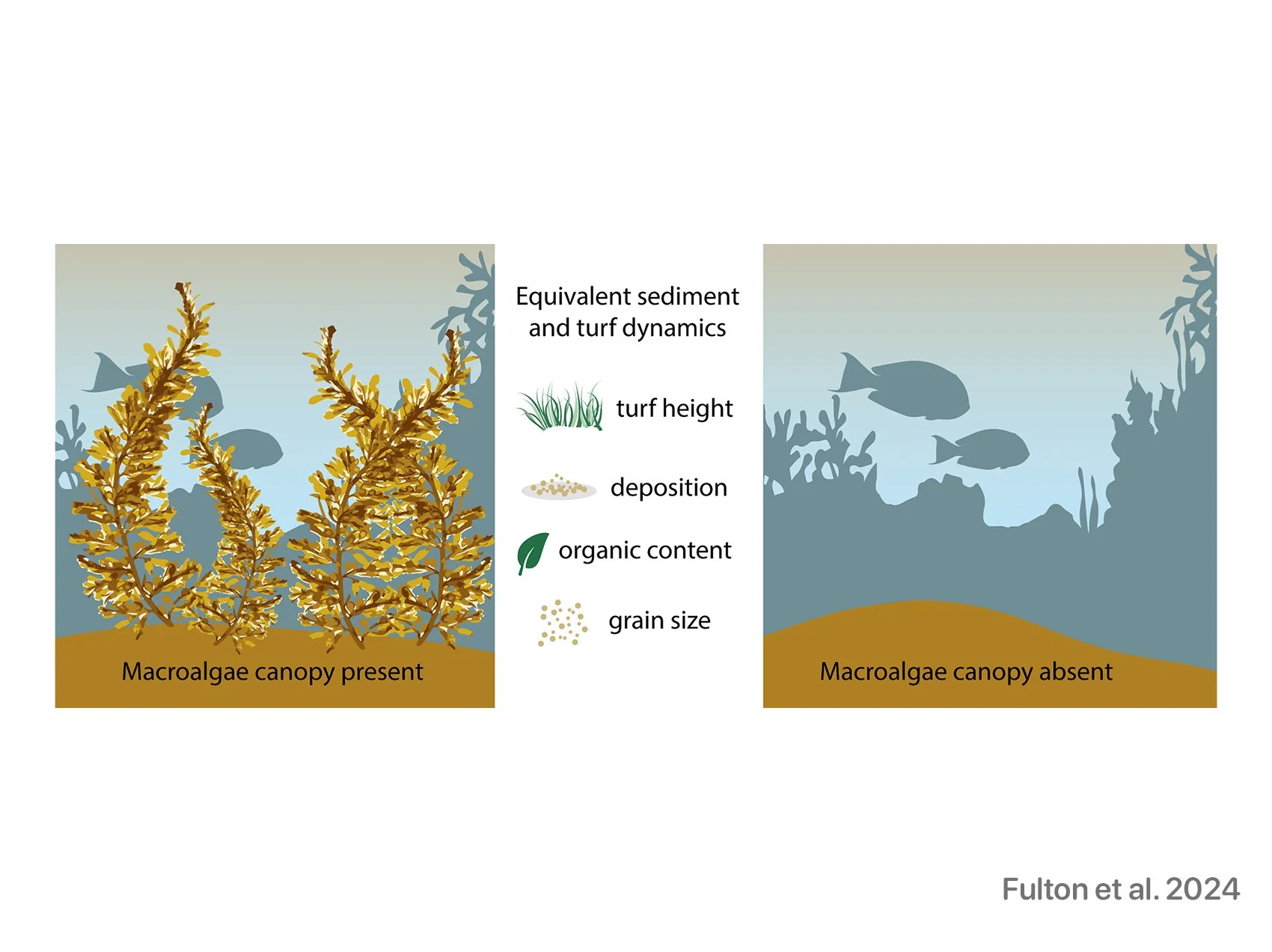
![Comparison of underwater seabed with and without macroalgae canopy. Left side shows seabed with macroalgae canopy present, characterized by sediment, turf height, deposition, and organic content. Right side shows seabed without macroalgae canopy, with similar features but no macroalgae. Key features include sediment, turf height, deposition, organic content, and grain size.]()
Inshore coral reef sediment and turf dynamics unaffected by canopy-forming macroalgae
2024
-
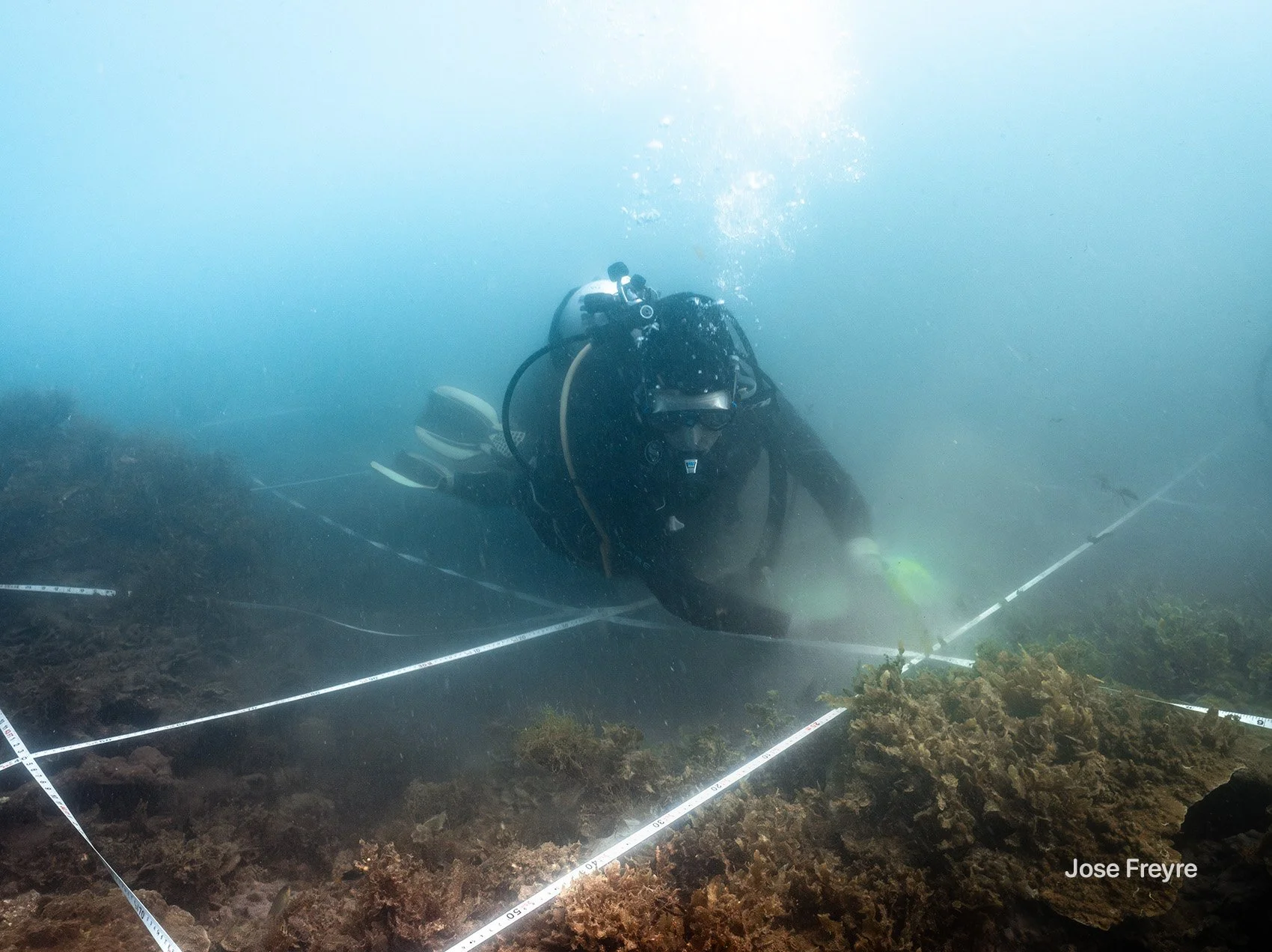
![A scuba diver underwater using measurement lines to study the ocean floor, with rocks and marine plants visible on the seabed.]()
Sea-weeding: Manual removal of macroalgae facilitates rapid coral recovery
2023
-
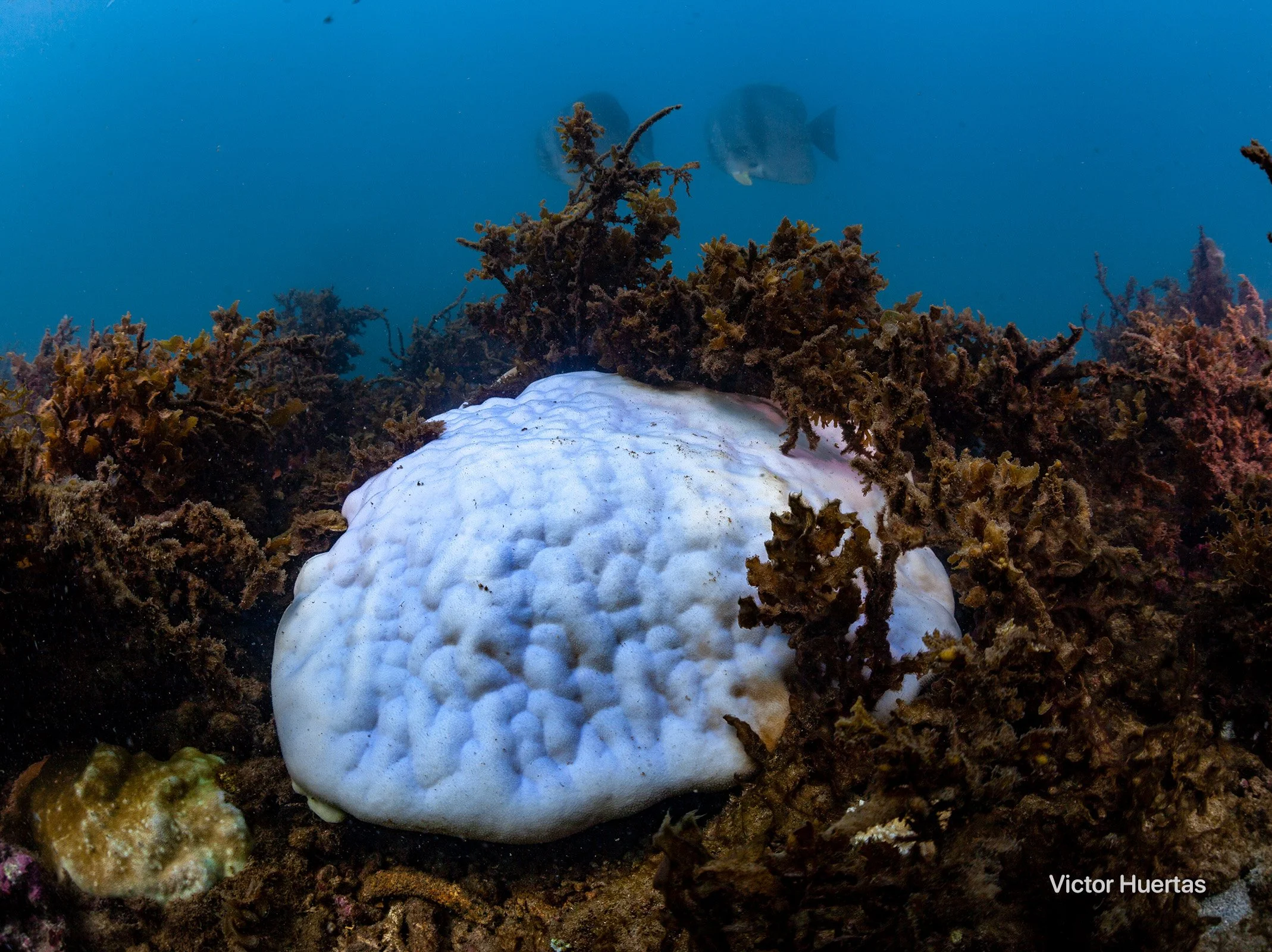
![A white sea creature resembling a starfish or sea cucumber on a rocky coral reef underwater. Two fish are swimming in the background.]()
Macroalgal canopies provide corals limited protection from bleaching and impede post-bleaching recovery
2022
-
![Scuba diver in black wetsuit swimming underwater amidst a rocky ocean floor with water particles visible.]()
Removal of macroalgae from degraded reefs enhances coral recruitment
2021
Press coverage